Published · Updated
Injection lipolysis is a minimally invasive and currently the most modern body-contouring method in aesthetic medicine, for women and men alike. It is a good solution above all for people with a small excess of fat tissue who feel self-conscious about minor flaws in their figure.
How does it work?
The treatment involves depositing a mixture of phosphatidylcholine, deoxycholate or organic silica into the fat tissue. Phosphatidylcholine (PPC) is a natural component of our body — lecithin. In medicine it has long been used to treat fat embolisms and to reduce blood lipids. Phosphatidylcholine and deoxycholate injected into fat tissue cause triglycerides to break down after the fat cells are destroyed. L-carnitine speeds up fat metabolism. The fats released in this way are then removed from the body naturally (they are broken down in the liver and eliminated).
What does the treatment look like?
Injection lipolysis is a popular aesthetic medicine treatment that helps reduce fat tissue. The whole procedure takes 20 to 45 minutes.
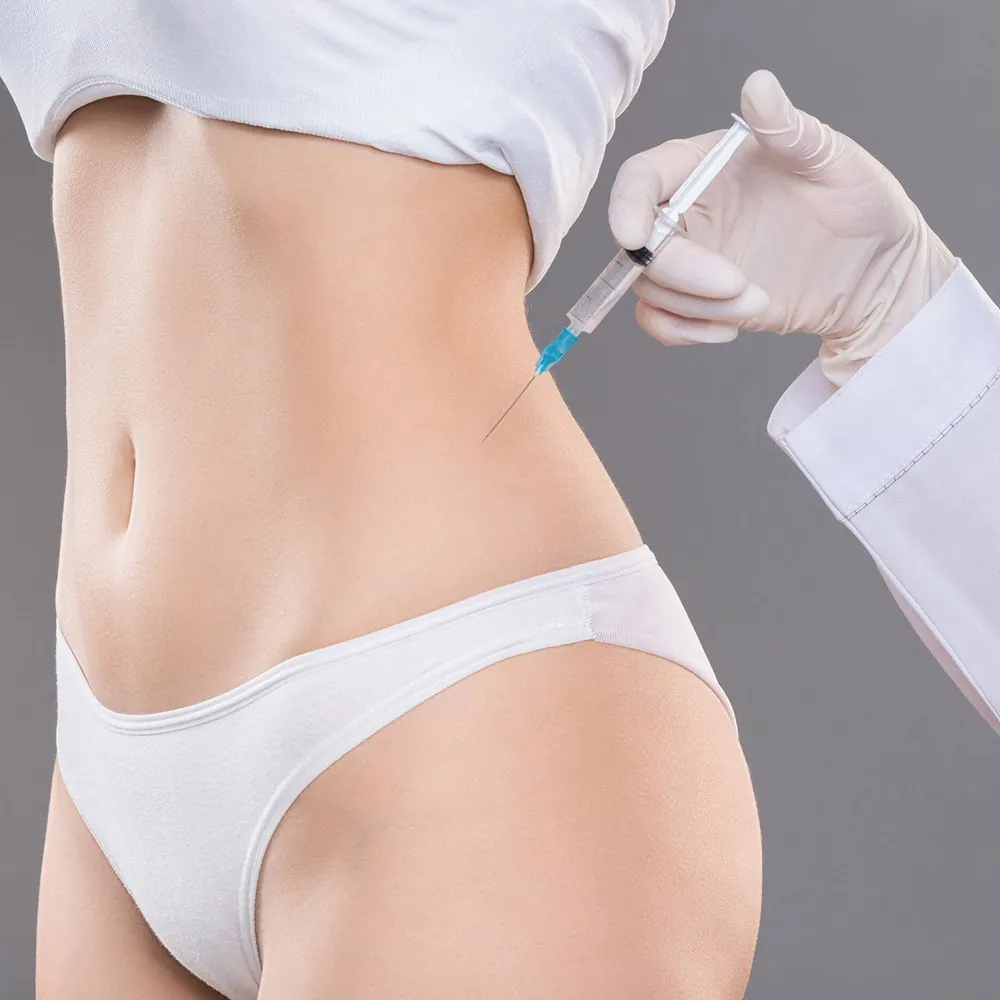
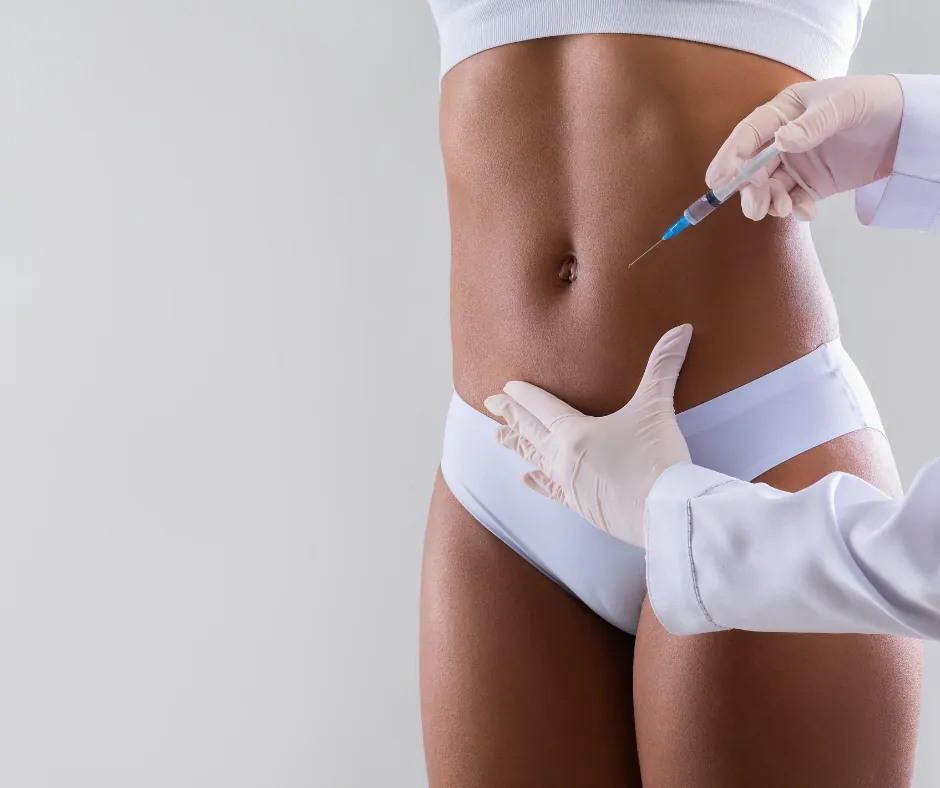
Before the treatment there is a consultation, during which we take a history of the client’s health. If there are no contraindications, the skin is disinfected and the product is injected with a very fine needle into the previously marked areas.
After the treatment the patient may feel burning and pain, and small bruises or swelling may appear. These are typical signs of the fat cells breaking down.
You can usually return to normal activities immediately, but discomfort may be felt for 2–3 days. Lipolysis can be repeated every few weeks, usually 2–3 times, depending on the amount of fat tissue.
The result of a series of treatments is usually a loss of 4 to 5 centimetres in circumference at the injection site.