Published · Updated
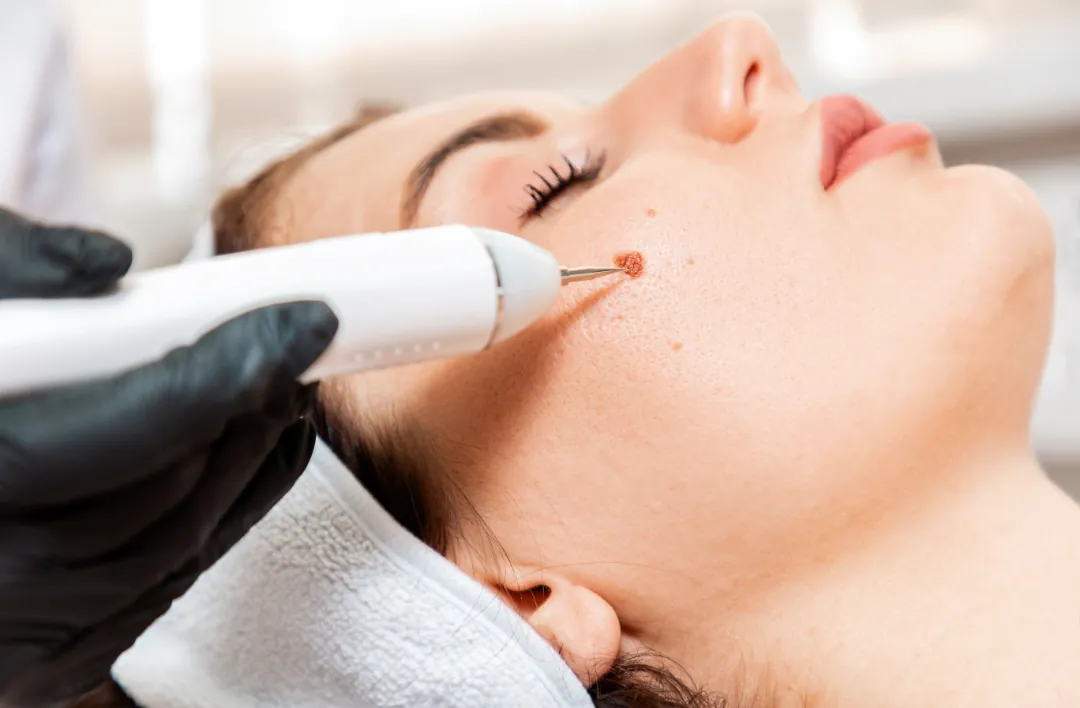
Electrocoagulation is a procedure used in aesthetic medicine, cosmetology, gynaecology and surgery, among other fields. Its purpose is the permanent reduction of small skin lesions. The treatment is based on using electric current to thermally coagulate tissue. Using a small needle or a suitably shaped tip, the specialist precisely targets the chosen lesion and releases a pulse that denatures and destroys the proteins and closes the blood vessels. During this process a high temperature is generated, reaching up to 200 degrees Celsius, and the characteristic smell of coagulating protein is released.
Electrocoagulation makes it possible to remove skin lesions such as milia, xanthelasma, fibromas and warts, and it is also often used to close blood vessels. While with pigmented lesions there are sometimes purely aesthetic reasons for removal, with capillaries and milia the treatment is performed for medical reasons.
What are the indications for electrocoagulation?
Removal of skin lesions:
- verrucas,
- fibromas,
- milia,
- sebaceous cysts,
- viral, flat and seborrhoeic warts,
- molluscum contagiosum,
- spider angiomas,
- dilated blood capillaries,
- enlarged sebaceous and sweat glands,
- cutaneous horn,
- actinic keratosis,
- unwanted or excessive hair.